
Selling cost calculator
How much of the sale do you keep?
Enter the sale price and what is up to you. The notary's fees, the state duty and the tax are worked out under the regulations.
Not sure of the price? Value your home
You agree the commission with the agent. Selling yourself? Leave it empty.
Notary
The parties agree how to split the notary's fees; often half each.
Cleaning, small repairs, photos, statements, energy certificate.
Tax
Counted from the Land Register entry. 60 months = 5 years.
For the exemption after 60 months it must have been the only one for the whole last 60 months.
The purchase price plus the state duty and commission you paid when buying.
Documented renovation and building costs.
You keep
€149,971.56
of a €150,000 sale price
Cost pile
- Agent's commissionagreed with the agent€0.00
- NotarySimple contract, your share with VAT€28.44
- State duty and office feepaid by the buyer: €2,265.00€0.00
- Income taxenter how many months you have owned it€0.00
- Preparationcleaning, repairs, photos€0.00
- Total costs
- €28.44
This is an estimate. The notary may also charge for drafting the contract and data requests — ask for a quote. Mortgage deletion and bank costs are not included.
Rates checked: 9 November 2026.
The real estate agent's commission
If you sell with a real estate agent, the biggest cost is usually the commission. The law does not set it: you agree it, it is usually a few percent of the sale price, and the seller pays it. If the agent is registered for VAT, 21% VAT is added. The contract with the agent is made in writing and should make clear what the commission covers.
What the commission pays for
- Pricing
- Marketing
- Viewings
- Negotiation and paperwork
The commission is negotiable
The state duty and the notary's fees are set by regulation; the commission is agreed. Ask two or three agents for a quote and compare what you get for it, whether it is a percentage or a fixed sum and whether VAT is added. How to compare quotes: see the guide how to choose a real estate agent; whether you need an agent at all: sell with an agent or yourself?.
The notary and the Land Register
In Latvia the purchase contract can be a simple written contract or a notarial deed. In the simple case the notary certifies the signatures on the corroboration request (€16 per signature) and files it with the Land Register (€15), plus VAT. A notarial deed costs 0.5% of the transaction amount, at least €140, plus VAT. Holding the price in a notary deposit costs 0.3%, at least €80, plus VAT. The parties agree how to split the notary's fees.
The buyer pays the state duty for registering ownership in the Land Register: 1.5% of the higher of the purchase price and the cadastral value, capped at €50,000, plus the €15 office fee. If the request is filed more than six months after signing, the state duty is one and a half times higher.
Completing the deal at a price of €150,000
- Simple contract: certifying signaturesThe notary certifies both parties' signatures on the corroboration request (€16 per signature) and files it with the Land Register (€15), plus VAT. Drafting the contract may cost extra.€56.87
- Notarial deed0.5% of the transaction amount, at least €140, plus VAT (Cabinet Regulation No. 737).€907.50
- Notary depositIf the notary holds the price: 0.3%, at least €80, plus VAT for the first month.€544.50
- State duty (paid by the buyer)1.5% of the higher of the price and the cadastral value, capped at €50,000; 0.5% between close relatives (Cabinet Regulation No. 1250).€2,250.00
- Office fee (paid by the buyer)For registering a new right, per person (Land Register Law, Section 107).€15.00
Income tax on the sale
A gain from selling real estate is taxed at 25.5% personal income tax. The gain is the sale price minus the acquisition value and documented investment in improving the property. The acquisition value also includes the state duty and commission you paid when buying.
No tax is due if you have owned the property for more than 60 months (counted from the Land Register entry) and it was your declared residence for at least 12 consecutive months; or if it was your only real estate for the last 60 months; or if it is your only real estate and you reinvest the money in functionally similar real estate within 12 months before or after the sale.
Have you owned the property for more than 60 months, counted from the Land Register entry?
Repaying the loan and deleting the mortgage
If the flat has a mortgage loan, the balance is usually paid to the bank from the price that arrives in the notary deposit or the bank escrow account. The bank consents to deleting the mortgage, and the mortgage is deleted in the Land Register. Check your loan agreement for any compensation for early repayment, and agree the procedure with the bank in good time.
Preparation costs
There may be small costs before the sale: cleaning, small repairs, professional photos, the Land Register extract and the manager's no-debt statement, and an energy certificate if the flat needs one.
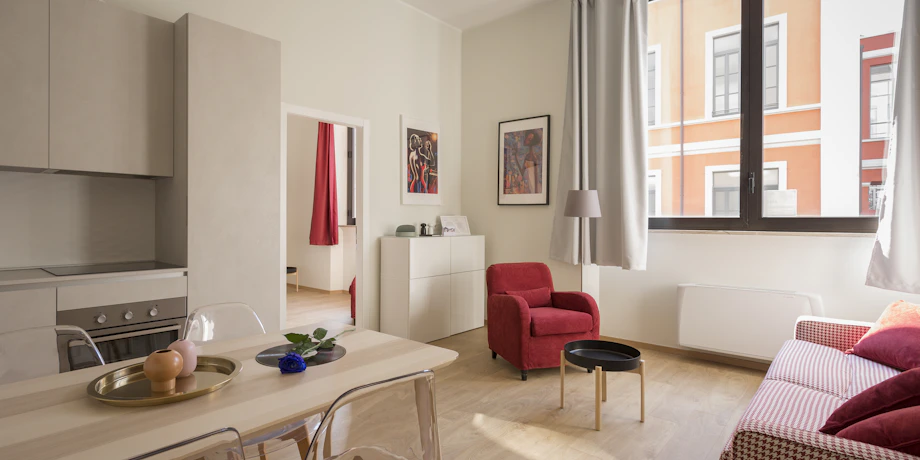
Cleaning and small repairs
A clean flat looks better in photos and at viewings. A dripping tap, a loose skirting board or a dead bulb are things a buyer notices at once.
Photos
Bright photos taken in daylight are the first impression of the listing. If you sell with an agent, ask whether photos are included in the commission.
Documents and statements
The Land Register extract, the cadastre data and the manager's no-debt statement. Since 2026 buyers ask for this statement almost every time. Land Register ↗
Energy certificate
Needed for a flat over 50 m² with its own heat metering, unless there is a valid certificate for the whole building. Issued certificates are visible in BIS. BIS ↗
How to prepare the flat and documents for sale: see the guide to selling an apartment.
When you pay what
The costs do not come all at once: some before the sale, most during the deal, and the tax after the quarter ends.
- 1
Before the listing preparation
You pay for cleaning, small repairs, photos and statements when they are done or requested.
- Preparation
- 2
Signing with an agent an agreement, not yet a payment
The contract with the agent, made in writing, sets the commission, whether VAT is added and when it is due.
- Commission agreed
- 3
On the deal day purchase contract
The notary invoices the signature certification or the notarial deed and the deposit; the parties pay as agreed. The buyer pays the price into the notary deposit or a bank escrow account. You pay the commission when the contract says.
- Notary
- Commission
- 4
Land Register entry within 10 days
The buyer pays the state duty and the office fee, and the Land Register office decides within 10 days. Once the buyer is entered as owner, the loan balance is paid to the bank from the deposit or escrow account and the rest is paid to you.
- State duty (buyer)
- 5
After the quarter ends capital gains declaration
If the sale is not tax-exempt and the gain in the quarter exceeds €1,000, you file the declaration (DK) by the 15th and pay the tax by the 23rd of the month after the quarter; otherwise by 15 and 23 January of the next year.
- Income tax
Who usually pays
The law does not say who pays the notary: the parties agree it in the contract. The state duty and office fee for the Land Register entry are usually paid by the buyer, since the entry is made in the buyer's favour. This is the usual split.
| Cost | Seller | Split | Buyer |
|---|---|---|---|
| Agent's commission and VATif the seller hired the agent | Seller | ||
| Notary's fees and VATas agreed | Split | ||
| State duty for registering ownership1.5%, capped at €50,000 | Buyer | ||
| Office fee€15 per new right | Buyer | ||
| Registering the buyer's mortgage0.1% of the loan | Buyer | ||
| Repaying the seller's loan and deleting the mortgage | Seller | ||
| Income tax on the gainunless exempt | Seller | ||
| Cleaning, repairs, statements, photos | Seller |
For the buyer's costs in detail, see the first-time buyer guide.
Example: how the costs add up
Selling a flat for €150,000 with a 2% commission, the agent receives €3,000, or €3,630 with 21% VAT. With a simple contract, the notary certifying the signatures and filing with the Land Register costs a few dozen euros, often split in half; a notarial deed would cost €750 plus VAT. The buyer also pays €2,250 state duty and the €15 office fee. If you have owned the flat for more than 60 months and it was your declared residence, there is no tax.

The guide's example
A €150,000 flat, 2% commission + VAT
- Agent's commission with VAT
- €3,630.00
- Notary, seller's half (simple contract)
- €28.44
- State duty and office fee (the buyer pays €2,265.00)
- €0.00
- Income tax (residence, > 60 months)
- €0.00
Notary and duties: €2,321.87 in total, for both sides together.
Rule of thumb: the biggest sum is usually the commission, the notary is modest with a simple contract, but tax can become the largest item if no exemption applies. Check the tax before signing and ask the notary for an estimate.