Updated November 2026
How to value your home
Before selling, it pays to know what your home is really worth. Here's how to estimate it realistically, without over- or under-pricing, and why the cadastral value won't tell you.
See your home's price now
- Price range at once
- No account needed
- Free
By the TopMakleri.lv editorial team
In short
- 01First range
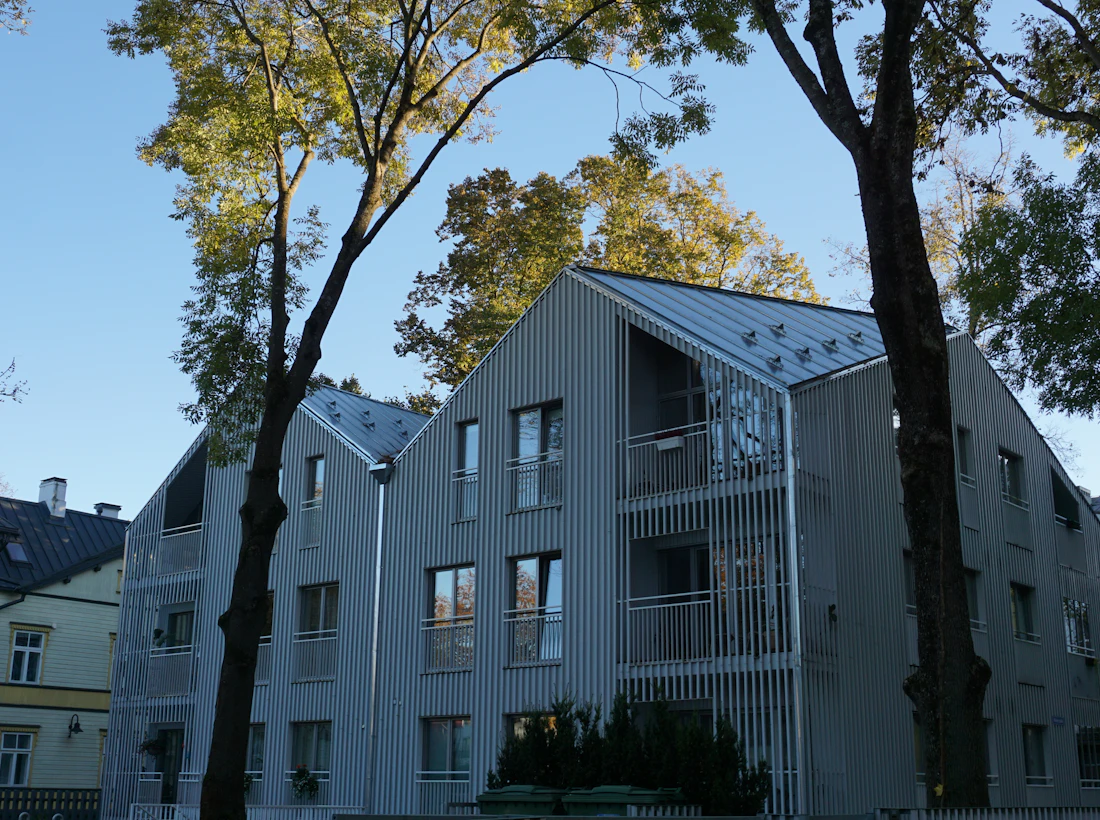
Start from what similar homes in your area cost per m²: both registered sales and current listings.
- 02Narrower range
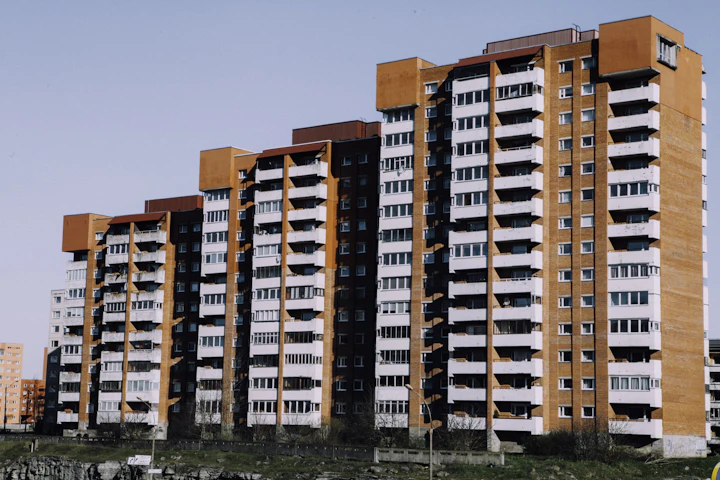
Account for condition, floor, building series, energy efficiency and who owns the land under the building: they swing the price by tens of percent.
- 03Exact valuation
The asking price isn't the sale price, and the cadastral value isn't the market value. A local real estate agent can pin down the exact price.
01 / 05
Start from comparable sales
The simplest starting point is to see what similar homes in your area are listed and sold for. Check the median price (€/m²) in your area and multiply it by your home's floor area for a first range.
Registered sale prices are collected by the State Land Service (VZD). You will find them by town and year in the Latvian property market overview.
Choose comparables as similar as possible: same area, similar size, number of rooms, building series and year built. The closer the comparison, the more reliable the estimate.
A good comparable has
- The same area
- A similar size
- The same number of rooms
- A similar series and year
- Rīga2,686 €/m²3,402 listings for sale2,686 €161,000 €
- Jūrmala2,853 €/m²511 listings for sale2,853 €171,000 €
- Liepāja910 €/m²252 listings for sale910 €55,000 €
- Daugavpils1,042 €/m²155 listings for sale1,042 €63,000 €
- Ventspils789 €/m²110 listings for sale789 €47,000 €
- Jelgava856 €/m²856 €51,000 €
- Rēzekne793 €/m²793 €48,000 €
- Jēkabpils544 €/m²544 €33,000 €
The starting point is the municipality's median asking price multiplied by the area, not your home's price. The district, the building and the condition shift it by tens of percent.
See the price range for your address →02 / 05
Account for what moves the price
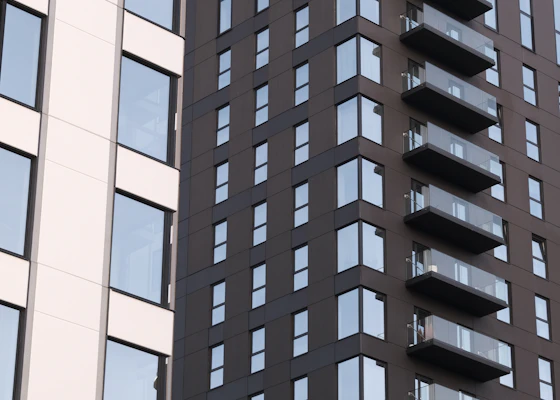
The median is a starting point, but your specific home can differ a lot. The biggest factors:
Your home compared with the area
0 / 6Mark at least one factor
Compare your home with a typical similar home in the area: the same type and a similar size.
How much exactly depends on how big the difference is. Check the estimate for your address and ask a local agent's opinion.
03 / 05
The asking price is not the sale price
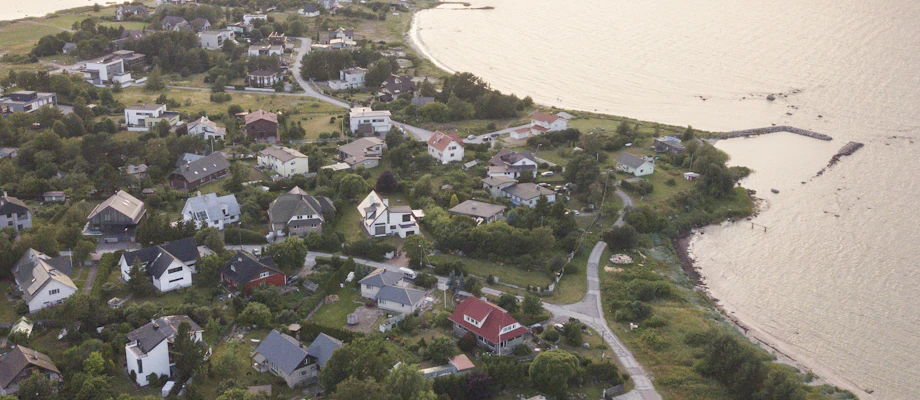
On ss.lv and city24.lv you see asking prices: what sellers hope to get. The actual sale price is often lower (negotiation, market conditions). For registered sale prices and the wider picture, see the property market overview.
Negotiation
The buyer makes an offer and the seller replies. Only then is the final price agreed.
The market
With fewer buyers and more listings, the seller has less room on price.
Price per m² of flats: asked and paid
Rīgasales 2026 Jan–Sep
2,686 €/m²1,156 €/m²Jūrmalasales 2026 Jan–Sep
2,853 €/m²1,025 €/m²Daugavpilssales 2026 Jan–Sep
1,042 €/m²356 €/m²
The homes for sale and the homes sold are not the same homes, so the gap is not bargaining room as such. It does show that the portal price is not yet the sale price.
Rīga · flat sale price · 2026 (Jan–Sep)
1,156 €/m²
+65.4%in 10 years · 8,343 sales
State Land Service (VZD) transaction data, median price of flats.
Registered sale prices by town, with time on the market and the number of listings, are in the property market overview.
04 / 05
The cadastral value is not the market value
The State Land Service (VZD) calculates the cadastral value automatically, by formula, from the data registered in the cadastre: area, use, building type and wear, and the value zone the property is in. Nobody has looked at your home, so it is not a market value and is usually lower.
Since 1 January 2025 every property has two cadastral values:
- Fiscal cadastral value: reflects the 2012–2013 market. It is the base for the real estate tax (NĪN), state fees and other payments to the budget.
- Universal cadastral value: reflects the market on 1 July 2022, but at most 80% of the average market price level. It is used for the land-use fee, ending divided ownership and accounting.
The values are recalculated when the cadastre data change; there is no longer a yearly revaluation on 1 January. You can see your cadastral values for free on kadastrs.lv or in the VZD e-service "Mani dati kadastrā".
Municipalities set the real estate tax rate, between 0.2% and 3% of the cadastral value. In Rīga, a home where someone has their declared residence on 1 January pays 0.2% of the value up to €57,000, 0.4% of the part up to €107,000 and 0.6% of the part above; if nobody is declared there, the rate is 1.5%. The tax is paid in four instalments by 31 March, 15 May, 15 August and 15 November, or for the whole year at once.
Rates in other municipalities, reliefs and how to dispute the value are in the guide to real estate tax.
The cadastral value is also the floor for the state duty the buyer pays to register ownership in the Land Register: 1.5% of the higher of the price and the cadastral value.
Fiscal
The 2012–2013 market level. Real estate tax and state fees.
Universal
The market on 1 July 2022, at most 80% of it. Land-use fee and accounting.
Market value
What the home would sell for today. Set by an agent or a certified valuer.
How much real estate tax will you pay in Rīga?
Enter the home's fiscal cadastral value.
60 €a year
15 € in each of the four instalments
- 0.2% of 30,000 €60 €
A rough estimate for a home in Rīga at the rates of City Council regulation No. 148. The declared person must be a Latvian citizen or non-citizen, an EU, EEA or Swiss citizen, or hold a Latvian permanent residence permit. Reliefs, such as those for families with children, are not included. Other municipalities set their own rates; the exact amount is on the municipality’s tax notice.
05 / 05
Ask a local real estate agent for a valuation
The most accurate figure comes from a local real estate agent who sees your home's condition and knows the area's buyers. Enter your address to see an instant price range and ask the most active agents in your area for a free exact valuation.
If the value is needed for a bank, a court or a company's balance sheet, an agent's opinion won't do: you need a valuation by a certified property valuer.
What the agent looks at on site
- Condition and quality of the renovation
- Layout, light and view
- The building: renovation, reserve fund and planned works
- Who is looking for a home in the area right now and what they value
How to choose an agent and what to ask them: read the guide to choosing an agent.
Four ways to find out the price
Comparing yourself
Listings, registered sales and your own read of the factors that move the price.
- Cost
- Free
- Best for
- A first idea
Automatic valuation
Listings of similar homes near you and cadastre data.
- Cost
- Free, no account needed
- Best for
- A quick price range
Agent valuation
The home's condition, layout and view, and who is buying in the area.
- Cost
- Free and non-binding
- Best for
- Setting the sale price
Valuer's report
An official document on the home's market value by a certified property valuer.
- Cost
- Paid, for a flat usually from ~€150
- Best for
- A bank, a court or a company's balance sheet
Once the price is set, read how the sale works step by step: how to sell an apartment.
Ask the most active agents in your area for a valuation
Enter the property address. You will see the most active agents near you and can contact them if you wish.
Frequently asked questions
How accurate is the automated estimate?
An estimate from listings of similar homes gives a good range, but doesn't account for your home's condition, floor or layout. The exact figure comes from an agent who sees the home.
Does the cadastral value show what my home is worth?
No. The fiscal cadastral value reflects the 2012–2013 market, and the universal one is at most 80% of the average market price level. Both are calculated by formula without seeing the home, so the market value is usually higher.
How is the real estate tax calculated?
From the fiscal cadastral value at the rate the municipality sets (0.2–3%). In Rīga a home with a declared resident pays 0.2–0.6% depending on the value, and 1.5% without one. The minimum tax is €7 per taxpayer per municipality.
Is valuing a home free?
The instant estimate and an agent's valuation are free and non-binding. A certified valuer's report is a paid service; for an apartment it usually costs from about €150.
What is the difference between an agent's valuation and a valuer's report?
An agent's valuation is a free market estimate for planning the sale. A valuer's report is an official document drawn up by a certified property valuer, which a bank asks for when granting a mortgage, for example. A valuer's report is paid for.
Why can the sale price be lower than the asking price?
The asking price is the seller's wish. The sale price is reached in negotiation and depends on the market. Registered sale prices are collected by the State Land Service (VZD).
Is it worth checking the floor area?
Yes. The price per m² is multiplied by the area, so a wrong area shifts the whole price. Compare the area in the listing or the valuation with the cadastre data (kadastrs.lv).
Does Rīga give families with children a real estate tax relief?
Yes. If children are declared at the home on 1 January, Rīga grants a 50%, 70% or 90% relief (for one, two, or three or more children), up to €1,000 a year. Other municipalities set their own reliefs.
Data and sources
- VZD: fiscal and universal cadastral values (in Latvian) ↗
- Law on Real Estate Tax (likumi.lv, in Latvian) ↗
- Rīga City Council regulation No. 148 on real estate tax (likumi.lv, in Latvian) ↗
- Cabinet Regulation No. 1250 on Land Register state duty (likumi.lv, in Latvian) ↗
This is general information, not legal or tax advice; for exact terms rely on your bank, notary and official sources.
Read also
- What is a property valuation report and when do you need oneA property valuation report is a certified valuer’s document on a property’s market value. When a bank requires one in Latvia, what it costs, how long it holds and how to check a valuer in the LĪVA register.
- How to sell an apartment in Latvia, step by stepSelling an apartment in Latvia step by step: documents, price, listings on ss.lv and city24.lv, earnest money, the purchase contract, the notary, the Land Register and handover.
- How to choose a real estate agent in LatviaA practical guide to choosing a real estate agent to sell your home in Latvia: the intermediaries register, local experience, questions for the meeting, a written contract and the commission.
- How to negotiate the property price in LatviaHow to make a well-grounded offer and negotiate a flat price in Latvia: asking prices against registered deal prices, leverage, a written offer, earnest money (rokasnauda) and the Land Register check.
- The costs and tax of selling an apartment in LatviaWhat selling an apartment in Latvia costs: the agent's commission and VAT, the notary, the Land Register state duty, repaying the loan and 25.5% personal income tax. With a calculator.
- Selling an apartment in Latvia: with an agent or yourself?An honest comparison of selling a flat in Latvia with a real estate agent or on your own: commission, workload, earnest money (rokasnauda), the purchase contract, the notary and the Land Register.
- What to check when buying an apartment in Latvia
- First-time home buyer's guide in Latvia
- Getting ready for a mortgage in Latvia
- How to rent out an apartment in Latvia
- The residential lease in Latvia: what it must contain
- Tenant not paying rent in Latvia: what to do
- Rent it out or sell?
- Real estate tax and cadastral value in Latvia